 Practical tips for handling celiac disease in workplace and social situations
The hardest part of living with celiac disease often isn’t the food itself—it’s the social situations. Dinner invitations, holidays with family, work events, dating… these moments require more than just knowing what to avoid. They require communication, boundaries, and sometimes uncomfortable honesty.
This guide covers the social realities of celiac disease with practical strategies that actually work.
The Foundation: Understanding Your Position
Before we dive into specific situations, understand these truths:
- Your health is not negotiable. It’s not “being difficult.” It’s not “high maintenance.” It’s a medical necessity. If you need a refresher on what celiac disease actually is, that resource can help you explain it to others.
- Most people want to help. They just don’t know how. Your job is to give them the information they need.
- Some people won’t understand. That’s their limitation, not yours.
- Restaurant dining is inherently risky. No amount of social pressure changes that fact.
Dining at Restaurants
The honest reality: Restaurant dining carries significant risk for people with celiac disease. Even restaurants with “gluten-free menus” typically cannot guarantee celiac-safe food due to shared kitchens and cross-contact.
Understanding What You’re Facing
- Restaurant kitchens are not designed for celiac safety. Flour particles become airborne, settle on surfaces, and contaminate everything.
- “Gluten-free menu items” are not celiac-safe. They’re prepared in the same kitchen, often on the same surfaces.
- Staff training cannot overcome kitchen design. Even well-trained staff work in kitchens that physically cannot isolate gluten-free preparation.
- Asking questions reduces risk marginally. It cannot eliminate it.
The Safest Approaches
- 100% gluten-free restaurants — The only truly safe option. Rare, but they exist.
- Eat before going out — Join the social occasion without eating restaurant food.
- Accept the risk consciously — If you choose to eat at a regular restaurant, understand that cross-contact is likely, not just possible.
If You Do Eat at Restaurants
Use Find Me Gluten Free: Read reviews from people with celiac disease (not just preference-based gluten-free). Look for patterns in reported reactions. For a full breakdown of restaurant communication strategies, see our dedicated dining out with celiac guide.
Communicate clearly: Say “celiac disease”—not “gluten allergy” or “gluten-free diet.” Explain that it’s a serious autoimmune condition, not a preference.
Ask specific questions:
- “Do you have a dedicated fryer?”
- “Can you prepare this in a separate pan with clean utensils?”
- “Does the chef understand cross-contact?”
Order simply: Plain grilled protein. Plain rice. Steamed vegetables. Avoid complex dishes with sauces.
Understand the limits: Even after you communicate perfectly, the kitchen’s physical setup hasn’t changed. Your words cannot create a safe prep area where none exists.
Red Flags (Leave or Don’t Order)
- “We can just pick off the croutons”
- “I’m sure it’s fine”
- Visible flour in the kitchen area
- Dismissiveness about your concerns
- Staff confusion about what contains gluten
A Note on “Gluten-Free Menus”
Restaurant “gluten-free menus” are designed for people who avoid gluten by preference—not for people with celiac disease. The menu lists items without gluten-containing ingredients, but this does NOT mean:
- The food is prepared in a gluten-free environment
- Cross-contact has been prevented
- The food is safe for someone with celiac disease
The presence of a “gluten-free menu” does not make a restaurant celiac-safe.
Dinner Parties and Potlucks
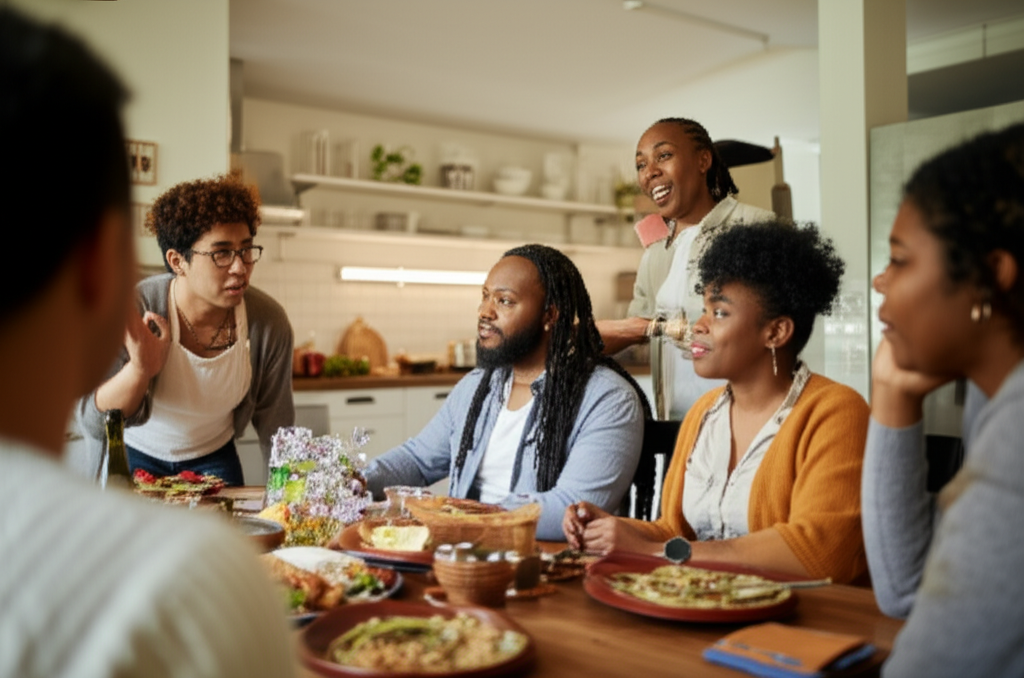 Most hosts genuinely want to help when they understand your needs
Social gatherings centered around food can work well with proper preparation.
When You’re a Guest
Communicate early: Tell your host about your needs when you accept the invitation—not at the door.
Offer solutions:
- “I’d love to bring a dish I can eat that everyone can enjoy!”
- “I’m happy to send you some easy recipe ideas.”
- “Please don’t go to extra trouble—I can bring something for myself.”
Eat before you go: A small meal beforehand means you won’t be hungry if options are limited.
Always bring backup: Even if your host plans to accommodate you, having your own safe option ensures you won’t go hungry.
What to Tell Hosts
Keep it simple and solution-oriented:
“I have celiac disease, which is an autoimmune condition. I can’t eat anything containing wheat, barley, or rye—even small amounts. I’d be happy to bring a dish to share, or I can send you some recipe ideas if you’d like. Please don’t stress about it!”
When You’re Hosting
Hosting gives you complete control—use it:
- Make the entire menu celiac-safe. Most guests won’t notice the difference.
- Use naturally safe foods: Grilled meats, rice, vegetables, salads.
- If serving any gluten-containing items: Label clearly and keep separate serving utensils.
- Set up serving areas carefully: Prevent cross-contact with dedicated serving spaces.
Family Gatherings and Holidays
Family events can be emotionally loaded, especially when food traditions are involved.
Common Challenges
“Just a little won’t hurt you” Response: “Actually, even small amounts cause intestinal damage—whether I feel symptoms or not. This is based on medical research, not just how I feel.”
“You used to eat my cooking all the time!” Response: “I know, and I loved it. But now I know that it was causing damage, even when I didn’t realize it. This is about my long-term health.”
“Are you sure you’re not just being picky?” Response: “I understand it might seem that way. Celiac disease is a diagnosed medical condition—it’s not a preference. My doctor has confirmed this through blood tests and biopsy.”
Holiday Strategies
Contribute celiac-safe versions: Offer to make celiac-safe versions of traditional dishes. Often no one notices the difference.
Bring your own safe options: For dishes that are hard to adapt (like Grandma’s famous stuffing), bring alternatives you can enjoy.
Focus on what you CAN eat: Most traditional holiday foods are naturally celiac-safe: turkey, ham, vegetables, mashed potatoes (check for flour), cranberry sauce.
Create new traditions: Start food traditions that are naturally safe and inclusive.
Setting Boundaries with Family
- You don’t need to justify your medical condition. A simple explanation is sufficient.
- It’s okay to bring your own food. Frame it positively: “I want to make sure there’s something I can enjoy!”
- You can decline food graciously. “Thank you for offering, but I need to be careful about cross-contact.”
- Walk away from arguments. You’re not obligated to debate your health needs.
Dating and Relationships
 A supportive partner learns about your needs and helps create a safe home environment
Dietary restrictions add complexity to dating, but they’re also an opportunity to identify supportive partners early.
Early Dating
When to mention it: Before any food-focused date. Keep it casual but clear:
“Just so you know, I have celiac disease—it’s an autoimmune condition that means I can’t eat gluten. I’m happy to suggest some activities, or I can research restaurant options if we want to eat out.”
Consider non-food dates: Coffee shops (bring your own snack), walks, museums, concerts, outdoor activities. Dating doesn’t have to center on food.
If dining out: Be honest that restaurant dining is risky for you. A partner who understands and supports your health needs is worth identifying early.
Serious Relationships
Educate your partner: Help them understand not just what you can’t eat, but why. Share resources like Celiac Disease Foundation.
Kitchen decisions: Many couples go fully celiac-safe at home for simplicity and safety. Discuss what works for both of you.
Meeting their family: Give your partner information to share with their family in advance, or offer to explain yourself if you’re more comfortable.
A supportive partner:
- Learns about celiac disease
- Advocates for you in social situations
- Doesn’t pressure you to take risks
- Helps you feel normal, not burdensome
If your partner or a family member wants to learn more about how to support you, share our caregiver survival guide with them—it is written specifically for the people standing beside someone with celiac.
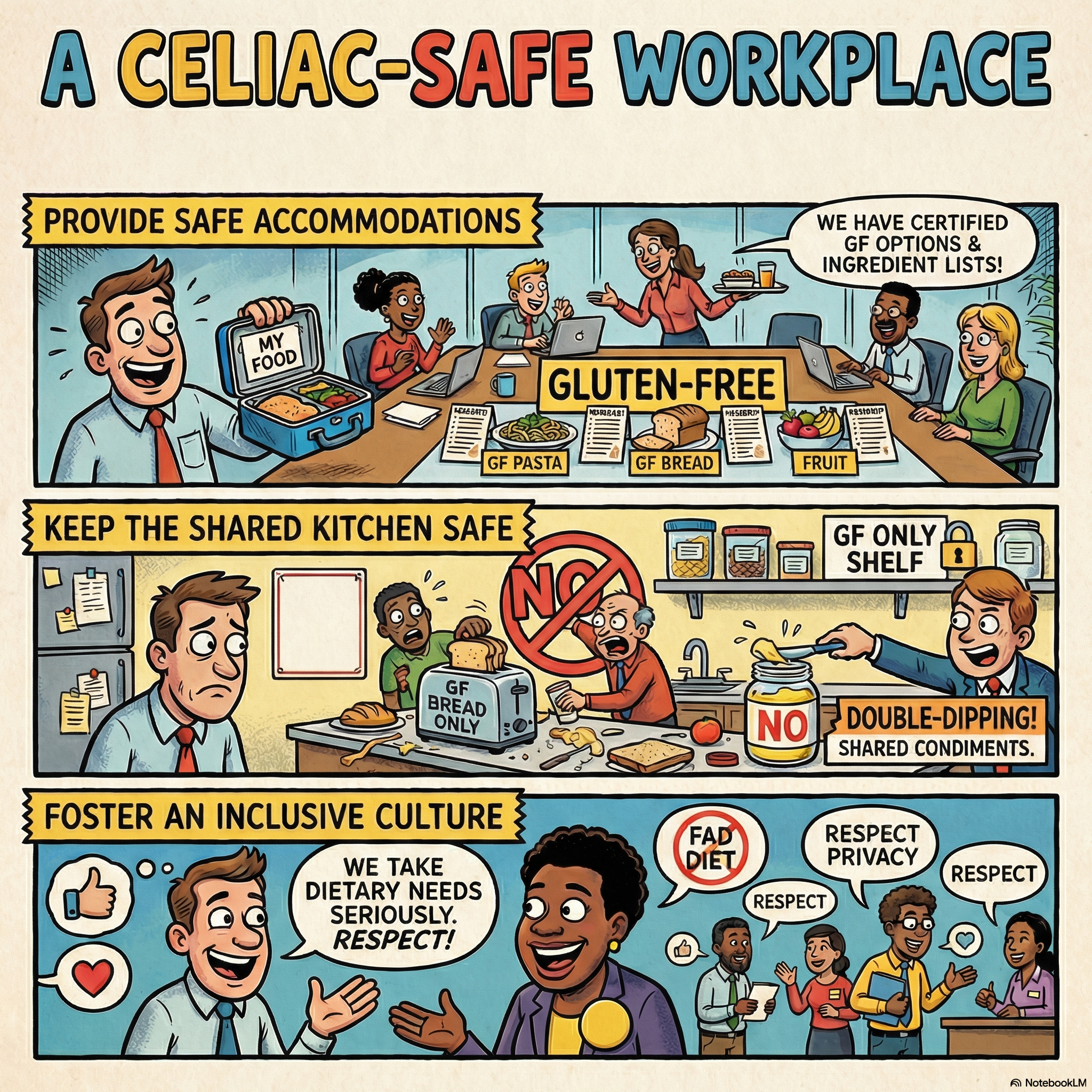
Workplace and Professional Events
Professional situations require balancing health needs with workplace relationships.
Work Lunches and Meetings
Speak up early: When someone suggests a restaurant, be proactive: “That sounds great! Do you mind if I check their options? I have some dietary restrictions.”
Catered meetings: Ask if you can order separately or bring your own food.
Keep safe snacks at your desk: For days when catered food isn’t safe.
Business Dinners and Networking
The safest approach: Eat a full meal before the event. Participate socially without relying on restaurant food.
If pressed about not eating: “I have a medical condition that makes restaurant dining difficult. I’ve already eaten, so I’ll just join you for a drink.”
If you must order: Understand you’re accepting risk. Even “simple” dishes can be cross-contaminated.
Focus on the purpose: Business relationships aren’t built on what you eat. Your presence and participation matter more than sharing a meal.
Disclosing to Employers
You’re not required to disclose celiac disease to your employer. However, if you need accommodations (like bringing your own food to catered events), a brief explanation may help:
“I have a medical condition that requires a specific diet. I’ll bring my own food to catered events—it’s no trouble for me.”
Building Confidence
Navigating social situations gets easier with practice.
Develop Your “Script”
Have practiced responses ready:
For hosts: “I have celiac disease—an autoimmune condition. I can’t eat wheat, barley, or rye. I’m happy to bring a dish!”
For restaurants: “I have celiac disease. Can you tell me about your protocols for preventing cross-contact?”
For skeptics: “This is a diagnosed medical condition. Even small amounts cause intestinal damage.”
For pushback: “I appreciate your concern, but this is what I need to do for my health.”
Connect with Community
- Celiac Disease Foundation — Resources and support
- Beyond Celiac — Community and research updates
- Reddit r/Celiac — Real-world experiences and advice
- Local support groups — In-person connection
Give Yourself Grace
- There will be awkward moments
- Some people won’t understand
- You might accidentally eat something unsafe
- That’s all part of the journey
Frequently Asked Questions
What if I accidentally eat gluten at a social event?
Don’t panic. Accidents happen. Focus on self-care: rest, hydrate, eat simple safe foods. Most people recover within a few days, though it varies. Learn from what happened to prevent future incidents.
How do I handle people who don’t believe celiac disease is real?
You don’t owe anyone a defense of your medical condition. “This is a diagnosed medical condition based on blood tests and intestinal biopsy. I follow my doctor’s recommendations.” If they persist, change the subject or walk away.
Is it rude to bring my own food to someone’s house?
Not at all. Most hosts appreciate not having the pressure of preparing safe food. Frame it positively: “I’d love to bring a dish I can eat that everyone can enjoy!”
How do I handle cross-contact concerns without seeming paranoid?
Clear, calm communication: “I need to be careful about cross-contact. Could you use a clean pan and utensils?” Most people are happy to help when they understand what you need.
Should I eat something unsafe to be polite?
No. Your health is more important than social comfort. A brief awkward moment is better than days of symptoms and intestinal damage. True friends and considerate hosts would never want you to harm yourself to be polite.
Conclusion
Living with celiac disease doesn’t mean living socially isolated. It means being prepared, communicating clearly, and setting appropriate boundaries.
The key is honesty—with yourself and others:
- Restaurant dining carries inherent risks that communication cannot eliminate
- Your health needs are not negotiable
- Most people want to help when they understand how
- Some social situations will be challenging, and that’s okay
Remember: advocating for your health isn’t being difficult—it’s being responsible. Over time, you’ll develop strategies that work for your life, and navigating social situations will become second nature. If you are early in your celiac journey, our newly diagnosed survival guide covers the full picture from diagnosis through your first year.
This guide is for informational purposes. Individual experiences with celiac disease vary, and you should always follow your healthcare provider’s recommendations.
Sources
- Celiac Disease Foundation. “Living with Celiac Disease.” Accessed January 2026.
- Beyond Celiac. “Social Situations.” Accessed January 2026.
- Catassi C, et al. “A prospective, double-blind, placebo-controlled trial to establish a safe gluten threshold for patients with celiac disease.” American Journal of Clinical Nutrition. 2007.
- Silvester JA, et al. “Living gluten-free: adherence, knowledge, lifestyle adaptations and feelings towards a gluten-free diet.” Journal of Human Nutrition and Dietetics. 2016.