If you’ve just been diagnosed with celiac disease, you’re probably overwhelmed. The internet is full of “gluten-free” advice from lifestyle bloggers and diet enthusiasts—but celiac disease isn’t a diet trend. It’s a serious autoimmune condition that requires medical-grade safety standards, not just avoiding bread. If the diagnosis is still fresh, our newly diagnosed survival guide walks you through the first days step by step.
This guide explains what celiac disease actually is, why “gluten-free” labels aren’t always safe enough, and what celiac-safe living really means.
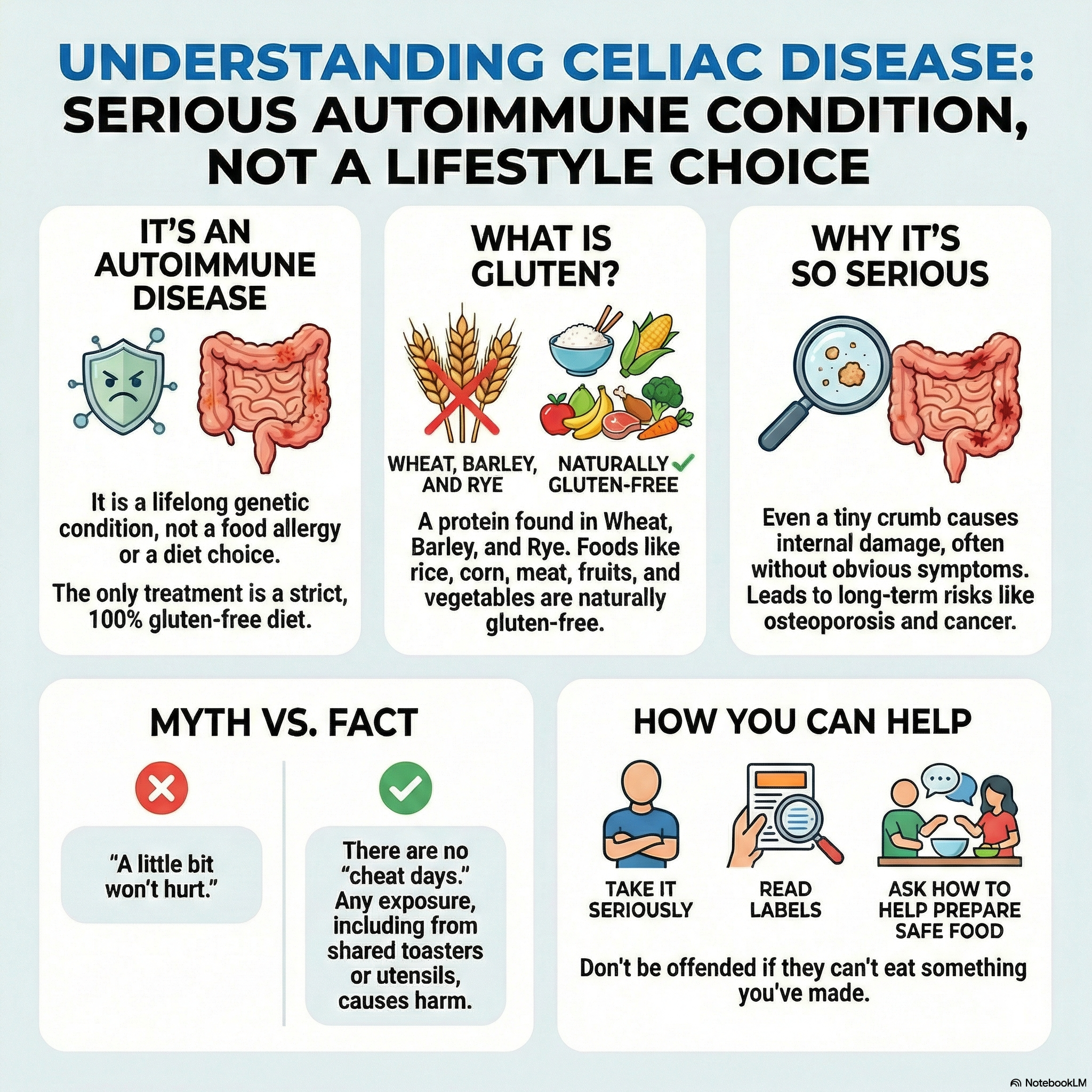 A visual overview of celiac disease, its symptoms, and how it affects your body
Key Takeaways
- Celiac disease is an autoimmune disorder—your immune system attacks your own intestines when you consume gluten
- It affects approximately 1 in 100 people worldwide, though up to 83% remain undiagnosed
- “Gluten-free” products (FDA allows up to 20 ppm gluten) may still cause reactions—celiac-safe means stricter standards
- The only treatment is a strict, lifelong celiac-safe diet with attention to cross-contact
- Even trace amounts of gluten cause intestinal damage, whether or not you feel symptoms
What is Celiac Disease?
Celiac disease is a chronic autoimmune disorder where consuming gluten triggers your immune system to attack the lining of your small intestine. This isn’t an allergy. This isn’t a sensitivity. This is your body’s defense system mistakenly destroying its own tissue.
The Mechanism: What Happens Inside Your Body
Your small intestine is lined with millions of finger-like projections called villi. These villi dramatically increase your intestinal surface area—if flattened out, your small intestine would cover a tennis court. The villi are essential for absorbing nutrients from food.
When someone with celiac disease eats gluten (for a deeper look at the proteins involved, see our complete guide to understanding gluten):
- Gluten proteins cross the intestinal barrier and trigger an immune response
- Your immune system produces antibodies that attack both the gluten AND your intestinal tissue
- The villi become inflamed and flattened (called villous atrophy)
- Nutrient absorption becomes impaired, leading to deficiencies even with a healthy diet
- This damage occurs every time you consume gluten—even tiny amounts
“Celiac disease is not a food preference or a fad diet. It is a serious genetic autoimmune disease that damages the villi of the small intestine and interferes with the absorption of nutrients from food.” — Celiac Disease Foundation
Why “Autoimmune” Matters
Understanding that celiac disease is autoimmune—not an allergy or intolerance—is crucial:
| Condition | Immune Involvement | Damage | Can “Outgrow” It? |
|---|---|---|---|
| Celiac Disease | Autoimmune attack on self | Permanent until gluten removed | No—lifelong |
| Food Allergy | IgE antibody response | Acute reaction, no tissue damage | Sometimes |
| Food Intolerance | No immune involvement | Digestive discomfort | Varies |
People with celiac disease are also at higher risk for other autoimmune conditions, including Type 1 diabetes, thyroid disease, and rheumatoid arthritis.
Who Gets Celiac Disease?
Celiac disease can develop at any age—from infancy to your 70s. However, you must have the genetic predisposition.
The Genetic Requirement
Two genes are associated with celiac disease: HLA-DQ2 and HLA-DQ8.
- About 95% of people with celiac disease carry HLA-DQ2
- Most of the remaining 5% carry HLA-DQ8
- However: 30-40% of the general population carries these genes, but only ~3% of carriers develop celiac disease
This means genetics are necessary but not sufficient. Something else—a trigger—activates the disease in genetically susceptible people.
Known Risk Factors
Family history is the strongest predictor:
- First-degree relative with celiac disease: 1 in 10 chance (10x general population)
- Studies show that 10-15% of first-degree relatives will test positive
Associated conditions that increase risk:
- Type 1 diabetes (~8% have celiac disease)
- Autoimmune thyroid disease
- Down syndrome, Turner syndrome, Williams syndrome
- IgA deficiency
- Other autoimmune conditions
Potential Triggers
Research suggests these factors may trigger celiac disease in genetically susceptible individuals:
- Gastrointestinal infections (especially rotavirus in infancy)
- Significant stress or trauma
- Pregnancy and childbirth
- Surgery
- Changes in gut microbiome
Recognizing the Symptoms
 Digestive symptoms are common but many people with celiac disease have no gut symptoms at all
Here’s what makes diagnosis difficult: celiac disease symptoms vary wildly from person to person. Some people have severe digestive issues. Others have no digestive symptoms at all. Some have fatigue, anemia, or neurological problems their doctors never connect to celiac disease.
”Classic” Digestive Symptoms
- Chronic diarrhea or constipation (or alternating between both)
- Bloating and excessive gas
- Abdominal pain and cramping
- Nausea and vomiting
- Pale, foul-smelling, floating stools (steatorrhea—from fat malabsorption)
Non-Digestive Symptoms (Often Missed)
Many people are diagnosed because of symptoms that seem completely unrelated to digestion:
- Fatigue that doesn’t improve with rest
- Iron-deficiency anemia that doesn’t respond to supplements (most common presentation in adults)
- Bone and joint pain, osteoporosis in younger people
- Dermatitis herpetiformis (intensely itchy skin rash)
- Mouth ulcers (canker sores)
- Neurological symptoms: numbness, tingling, balance problems
- “Brain fog”: difficulty concentrating, memory issues
- Depression and anxiety
- Infertility and recurrent miscarriage
Symptoms in Children
Children may show:
- Failure to thrive or poor weight gain
- Short stature or delayed growth
- Delayed puberty
- Dental enamel defects (permanent teeth)
- Irritability and behavioral changes
- Chronic fatigue
- ADHD-like symptoms
”Silent” Celiac Disease
Some people have no noticeable symptoms at all despite having intestinal damage. This is often discovered when:
- Family members are screened after a relative’s diagnosis
- Blood tests are done for other reasons
- Investigating unexplained anemia or osteoporosis
Silent celiac disease is still damaging—and still requires a strict celiac-safe diet.
Getting Diagnosed
 Proper diagnosis requires specific blood tests and usually an intestinal biopsy
Critical warning: Do NOT start a gluten-free diet before testing. Going gluten-free before diagnosis can cause false-negative results on blood tests and biopsy, making diagnosis impossible. You must be eating gluten regularly for tests to be accurate.
Step 1: Blood Tests (Serology)
Your doctor will order blood tests looking for specific antibodies:
| Test | What It Detects | Notes |
|---|---|---|
| tTG-IgA | Tissue transglutaminase antibodies | Most sensitive first-line test |
| EMA | Endomysial antibodies | Very specific; confirms tTG results |
| DGP-IgA/IgG | Deamidated gliadin peptide | Useful for IgA-deficient patients |
| Total serum IgA | IgA deficiency | ~2-3% of celiacs are IgA deficient |
According to the American College of Gastroenterology, tTG-IgA is the preferred single test for detection.
Step 2: Intestinal Biopsy (Gold Standard)
If blood tests are positive, the next step is an upper endoscopy with duodenal biopsy:
- A gastroenterologist passes a thin scope through your mouth to your small intestine
- They take 4-6 small tissue samples from different areas
- A pathologist examines the samples for villous atrophy, crypt hyperplasia, and increased intraepithelial lymphocytes
The biopsy remains the gold standard for diagnosis because it directly shows the intestinal damage.
Genetic Testing
HLA-DQ2/DQ8 testing is useful for:
- Ruling OUT celiac disease (if negative, celiac disease is extremely unlikely)
- Screening family members
- Clarifying uncertain diagnoses
- People already on a gluten-free diet (genes don’t change with diet)
Getting a Diagnosis If Already Gluten-Free
If you’ve already gone gluten-free, diagnosis becomes complicated. Options include:
- Gluten challenge: Eating gluten daily for 6-8 weeks before testing (difficult for many)
- Genetic testing: Can rule out celiac disease if negative
- Working with a specialist: A celiac-focused gastroenterologist may help interpret ambiguous results
Treatment: Beyond “Gluten-Free” to Celiac-Safe
 Celiac-safe living requires more than just avoiding gluten ingredients—cross-contact matters
The only treatment for celiac disease is a strict, lifelong diet free from gluten. But here’s what many newly diagnosed people don’t understand: “gluten-free” isn’t the same as “celiac-safe.”
Why “Gluten-Free” Isn’t Always Safe
- The FDA allows products labeled “gluten-free” to contain up to 20 parts per million (ppm) gluten
- Many “gluten-free” restaurant dishes are prepared in shared fryers or on shared surfaces
- Cross-contact can occur in manufacturing, food preparation, or storage — our kitchen setup guide covers how to prevent it at home
- Studies show many people on a “gluten-free diet” still have ongoing intestinal damage
What “Celiac-Safe” Actually Means
Celiac-safe is a higher standard:
| Standard | Definition | Safety Level |
|---|---|---|
| FDA “Gluten-Free” | Less than 20 ppm gluten | Minimum compliance |
| GFCO Certified | Less than 10 ppm gluten | Better |
| Dedicated Facility | No gluten processed in facility | Best |
For recipes, celiac-safe means:
- Every ingredient verified (not assumed) to be gluten-free
- Specific brand recommendations for critical items
- Preparation in a controlled environment
For restaurants, celiac-safe means:
- Dedicated fryers (not shared with breaded items)
- Separate preparation surfaces or thorough sanitization protocols
- Staff training on celiac disease and cross-contact
- Allergen-aware kitchen procedures
For products, celiac-safe means:
- Third-party certification (GFCO, NSF) preferred
- Manufactured in a dedicated facility when possible
- Clear labeling of cross-contact risk
Foods to Avoid
Gluten is found in:
- Wheat (all varieties: spelt, kamut, farro, durum, bulgur, semolina, einkorn)
- Barley (including malt, malt flavoring, malt extract, malt vinegar)
- Rye
- Triticale (wheat-rye hybrid)
- Oats (unless certified gluten-free—conventional oats are cross-contaminated)
Hidden Gluten Sources
Gluten hides in unexpected places. Always verify:
- Soy sauce (most contain wheat—use tamari or coconut aminos)
- Salad dressings and marinades
- Soups and sauces (often thickened with flour)
- Processed meats (fillers, binders)
- Medications and supplements
- Communion wafers
- Play-Doh (if children put hands in mouth after)
- Lipstick and lip balm
- Cross-contaminated bulk bins
Naturally Celiac-Safe Foods
Many whole foods are naturally safe:
- Fresh fruits and vegetables
- Unprocessed meat, poultry, and fish
- Eggs
- Plain dairy products
- Beans, legumes, nuts, and seeds
- Rice, quinoa, corn, millet, buckwheat, amaranth, teff
- Certified gluten-free oats
The Healing Timeline
Once you eliminate gluten completely, your intestines begin to heal. But “completely” is the key word—any gluten exposure resets the clock.
What to Expect
First 2 weeks:
- Many people feel worse initially (adjustment period)
- Some experience “withdrawal” symptoms
2-4 weeks:
- Digestive symptoms often improve
- Energy may start to return
3-6 months:
- Significant symptom improvement
- Antibody levels begin to decrease
1-2 years:
- Intestinal healing continues
- Children typically heal faster than adults
Adults over 50:
- Complete healing may take 2+ years
- Some may never achieve complete villous recovery
Follow-Up Care
Regular medical follow-up is essential:
- tTG-IgA monitoring: Should decrease and normalize over time
- Nutritional testing: Check for deficiencies (iron, B12, vitamin D, calcium)
- Bone density testing: Especially if diagnosed as adult
- Annual check-ups: With a celiac-knowledgeable healthcare provider
Living Well with Celiac Disease
A celiac diagnosis is life-changing, but it doesn’t mean your life is over—it means it’s different. Millions of people live full, healthy, delicious lives while managing celiac disease.
Building Your Support System
- Work with a celiac-specialized dietitian (not just any nutritionist)
- Connect with support groups: Celiac Disease Foundation, Beyond Celiac, Gluten Intolerance Group
- Educate your family and close friends about cross-contact, not just ingredients
- Find your celiac-safe restaurants and build relationships with staff
The Long-Term Outlook
With strict adherence to a celiac-safe diet, most people can:
- Achieve complete intestinal healing
- Resolve symptoms entirely
- Reduce the risk of complications (lymphoma, osteoporosis, infertility)
- Live a normal, healthy lifespan
Frequently Asked Questions
Is celiac disease the same as gluten intolerance?
No. Celiac disease is an autoimmune condition with measurable intestinal damage, specific antibodies, and genetic markers. Non-celiac gluten sensitivity (NCGS) causes symptoms without the autoimmune response or intestinal damage. Both require avoiding gluten, but they’re distinct conditions requiring different monitoring.
Can celiac disease be cured?
Currently, no. Celiac disease is a lifelong condition. The only treatment is a strict celiac-safe diet. Research into potential therapies (enzymes, tight junction regulators, vaccines) is ongoing but none are yet approved.
How much gluten is safe?
For people with celiac disease, no amount is truly “safe.” Even amounts too small to cause symptoms can cause intestinal damage. Research suggests keeping daily intake below 10mg (about 1/64 of a slice of bread) minimizes damage, but the safest approach is zero intentional exposure.
Can I ever have a “cheat day”?
No. This is one of the most dangerous myths. Every gluten exposure—whether you feel symptoms or not—causes intestinal damage and resets your healing. “Cheating” increases your risk of complications including intestinal lymphoma.
Will my children have celiac disease?
Your children have a ~10% chance of developing celiac disease if you have it (compared to 1% in the general population). Genetic testing can identify if they carry the HLA-DQ2/DQ8 genes. If they do, periodic antibody screening is recommended.
Conclusion
Celiac disease is a serious autoimmune condition — one whose recognition has a long medical history — that requires more than just “going gluten-free.” It requires celiac-safe living: understanding cross-contact, verifying products, choosing restaurants carefully, and maintaining strict vigilance for life.
But here’s the good news: once you understand what celiac-safe really means, managing this condition becomes second nature. You can eat delicious food. You can dine out. You can live a full, healthy life.
The key is knowledge, vigilance, and finding resources you can trust—resources that understand the difference between “gluten-free enough for a diet trend” and “celiac-safe for people who can’t afford to guess.”
This content is for informational purposes only and does not constitute medical advice. Always consult with a qualified healthcare provider for diagnosis and treatment of celiac disease.
Sources
- Celiac Disease Foundation. “What is Celiac Disease?” Accessed January 2026.
- National Institute of Diabetes and Digestive and Kidney Diseases. “Celiac Disease.” Accessed January 2026.
- Beyond Celiac. “Celiac Disease: Fast Facts.” Accessed January 2026.
- Green PHR, Cellier C. “Celiac Disease.” New England Journal of Medicine. 2007;357(17):1731-1743.
- Rubio-Tapia A, et al. “ACG Clinical Guidelines: Diagnosis and Management of Celiac Disease.” American Journal of Gastroenterology. 2013;108(5):656-676.
- Catassi C, et al. “A prospective, double-blind, placebo-controlled trial to establish a safe gluten threshold for patients with celiac disease.” American Journal of Clinical Nutrition. 2007;85(1):160-166.