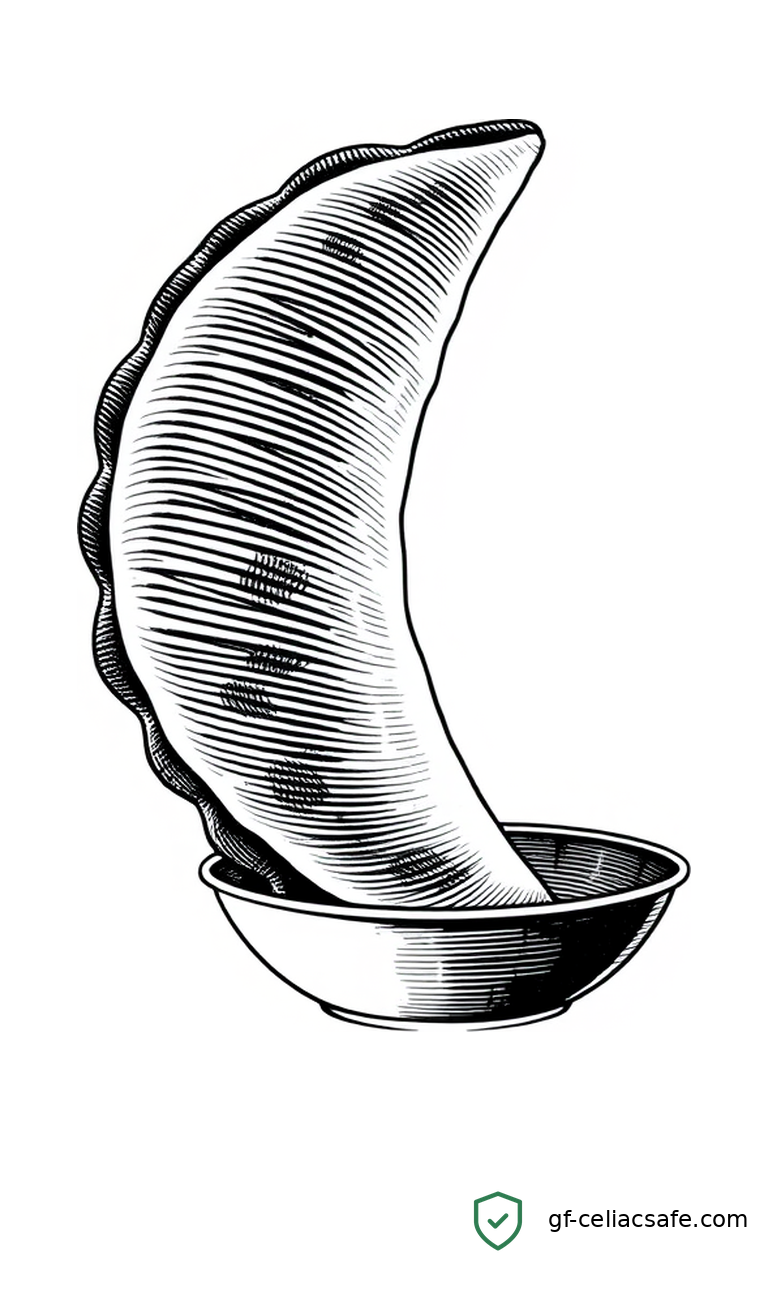
A gluten-free empanada brand has crossed a milestone that celiac families know is harder than it sounds: growing from a founder’s home kitchen into retail distribution. New Hope Network, the natural food industry’s trade publication, reported the story on August 3, 2026. For celiac families, the details behind that scaling journey matter as much as the milestone itself.
Empanadas are one of those foods that celiac patients have largely had to give up or make at home. Traditional empanada dough is built on wheat flour — the flakiness, the crimped edge, the slight chew all come from gluten. Getting a gluten-free version to taste like the real thing, and then manufacturing it safely at scale, is genuinely difficult. When a founder clears that bar and gets a product onto retail shelves, that is a real gain for the community.
What This Means for You
For celiac families, the gluten-free aisle has grown enormously over the past decade — but it has not grown evenly. Breads, pastas, and crackers are well-represented. Culturally specific foods — empanadas, dumplings, pierogi, samosas — are still largely missing, or available only from specialty mail-order brands with limited reach. When a product like a gluten-free empanada moves from a founder’s kitchen to brick-and-mortar retail, it means more families can access it without ordering online and hoping the shipping keeps it intact.
There is also a trust dimension to this kind of expansion. Home-kitchen operations, however passionate and careful the founder, cannot offer the third-party gluten-free certification and dedicated-facility manufacturing that many celiac patients need to feel safe. Scaling to retail almost always requires tightening manufacturing controls, getting certified, and establishing documented protocols for preventing cross-contact (the transfer of gluten from shared equipment, surfaces, or airborne flour dust). Growth, in this case, can make a product safer — not just more available.
For celiac parents specifically, this kind of news lands differently than it might for someone who simply prefers gluten-free eating. My son cannot have “probably fine” empanadas at a party. He needs something I can verify is safe, that he can eat without anxiety, and that actually tastes like food — not a science experiment. Every new retail option that clears that bar is a small but real improvement in his quality of life.
The broader trend here is encouraging. Stories like this one, alongside the story of Pilar Rengifo and The Choclo, show that Latin American food entrepreneurs are filling a gap the mainstream industry has ignored. These founders often have a personal connection to the need — a family member with celiac, a community that deserves to eat its own cuisine safely — and that personal stake tends to produce better products than a product line created purely by committee.
Key Takeaways
- A gluten-free empanada brand has scaled from home production to retail distribution, expanding access for celiac families.
- Traditional empanadas are made with wheat flour, so GF versions require both careful reformulation and rigorous cross-contact controls.
- Retail scaling often comes with stricter manufacturing standards and third-party certification — which can make a product safer, not just more available.
- This is part of a broader trend of culturally specific GF foods coming to market, driven by founders with personal stakes in the problem.
- Celiac patients should still verify any new product’s certification status and manufacturing claims before consuming it.
The Science
Want to understand why gluten-free empanada production is technically challenging? The details below explain what’s at stake in the kitchen and the factory.
Why Empanada Dough Is Hard to Replicate Without Gluten
Gluten — the protein network that forms when water activates proteins in wheat flour — is what gives traditional empanada dough its elasticity and structure. The dough needs to be pliable enough to fold and crimp, sturdy enough to hold a moist filling during baking or frying, and light enough to have some flake. Gluten does all of that at once.
Gluten-free doughs substitute alternative starches and binders: rice flour, cassava flour, tapioca starch, corn masa, or blends of these. Each behaves differently. Rice flour can be gritty. Tapioca can make a dough gummy. Cassava is closer in texture to wheat but can crack when cold. Getting the combination right typically requires extensive reformulation and testing — which is why home cooks spend months before a recipe is ready, and why scaling a working recipe into a consistent commercial product is a second, entirely separate challenge.
Cross-Contact in Shared Manufacturing
Cross-contact is the transfer of gluten from one food, surface, or piece of equipment to another — and it is the central manufacturing risk for celiac-safe products. Unlike cross-contamination (a food safety term for pathogen transfer), cross-contact is specifically about allergen and gluten transfer, and it only takes 20 milligrams of gluten per kilogram of food to disqualify a product from the 20 ppm (parts per million) threshold used by the FDA for gluten-free labeling in the United States.
Scaling from a home kitchen to a commercial facility raises both the risk and the obligation to manage it. A home operation may be naturally gluten-free because the founder doesn’t keep wheat in the house. A shared commercial facility introduces equipment, surfaces, airflows, and other products that may contain gluten. Responsible GF manufacturers address this through dedicated production lines, scheduled deep cleans with verified gluten-removal protocols, and lot testing of finished products.
Third-party certification programs — most prominently from the Gluten-Free Certification Organization (GFCO), which requires products to test below 10 ppm — provide the independent verification that self-labeling alone cannot. When evaluating any new GF retail product, celiac patients and their families should look for this certification mark, not just a “gluten-free” claim on the package.
Why Founder-Driven Brands Often Get This Right
The natural foods industry has long observed that the best products in sensitive dietary categories tend to come from founders with direct experience of the need. That personal stake changes the calculation on safety shortcuts. A founder who has watched a family member get sick from cross-contact is less likely to cut corners on manufacturing controls than a product manager meeting a quarterly SKU target.
New Hope Network, which covers the natural and specialty food industry, tracks this kind of brand formation closely. The platform’s reporting on the empanada brand’s scaling journey is significant precisely because growth is where founder-led GF brands are most at risk of compromising on the standards that made them trustworthy in the first place. The fact that this brand reached retail distribution — a process that requires documented food safety plans, facility inspections, and often retail partner audits — suggests those controls are in place.
Related Coverage
References
- New Hope Network. “Gluten-free empanadas scale from founder’s kitchen to retail.” Published August 3, 2026. Link
- U.S. Food & Drug Administration. “Gluten-Free Labeling of Foods.” FDA.gov.
- Gluten-Free Certification Organization (GFCO). Certification standards and threshold information. GFCO.org.