Complete guide to setting up a safe gluten-free kitchen and preventing cross-contact, whether shared or dedicated..
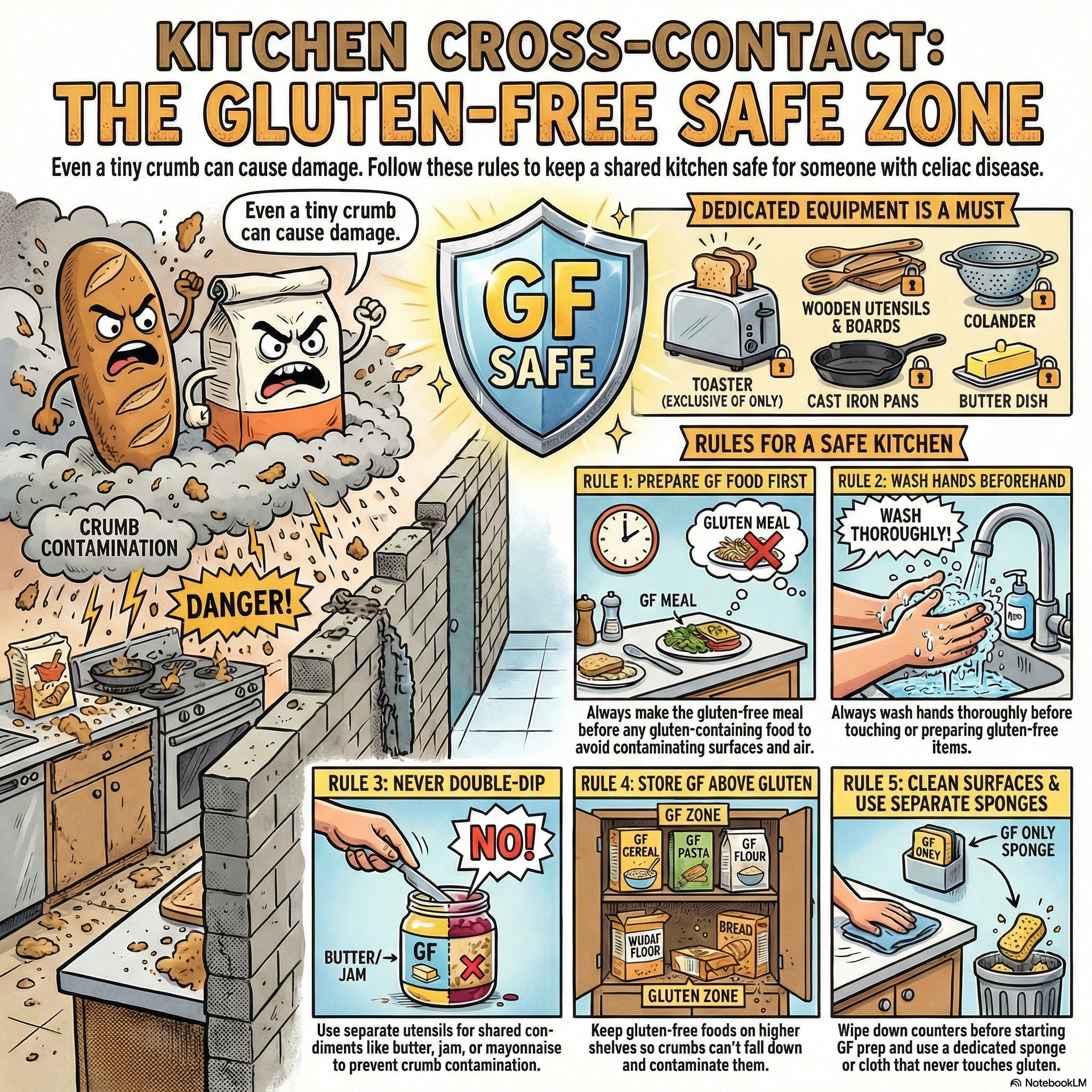 Your visual guide to creating a safe zone in your kitchen
Your kitchen should be a safe haven where you can prepare and enjoy food without worry. But for people with celiac disease, a typical kitchen can harbor hidden sources of gluten cross-contact—from the crumbs in your toaster to the wooden spoon that’s stirred wheat pasta.
This guide covers everything you need to know about setting up a gluten-free-safe kitchen, whether you’re going fully gluten-free or sharing your space with gluten-eating family members.
Key Takeaways
- Cross-contact can occur from shared surfaces, utensils, and appliances
- Even tiny amounts of gluten (crumbs) can cause damage
- Both dedicated and shared kitchens can be made safe with proper practices
- Color-coding and clear labeling help prevent accidents
- Consistent habits are more important than perfection
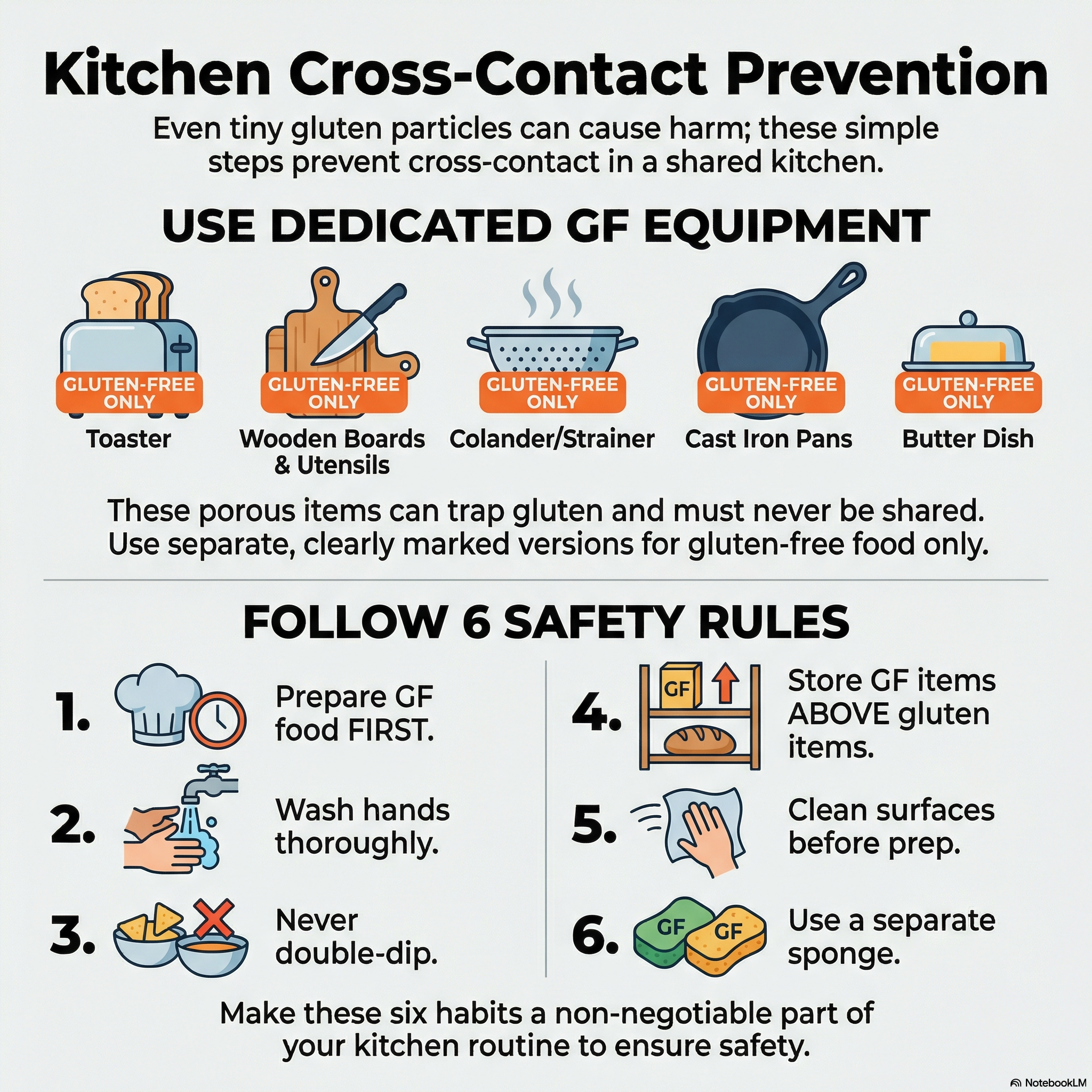 Detailed guide to preventing cross-contact in your kitchen
Understanding Cross-Contact
What Is Cross-Contact?
Cross-contact occurs when gluten transfers from a gluten-containing food or surface to a gluten-free food. If you are still getting up to speed on what gluten is and where it hides, our complete guide to understanding gluten is a good starting point. Cross-contact can happen through:
- Direct contact: Gluten-free bread touching a cutting board with wheat crumbs
- Shared utensils: Using the same spoon to stir regular and gluten-free pasta
- Shared appliances: Toasting gluten-free bread in a contaminated toaster
- Airborne particles: Flour dust settling on gluten-free food during baking
Why It Matters
For people with celiac disease:
- Even 10-50 mg of gluten daily can cause intestinal damage
- A single breadcrumb contains enough gluten to trigger a reaction
- Damage occurs whether or not symptoms are felt
- Cumulative exposure adds up over time
Option 1: The Fully Gluten-Free Kitchen
If everyone in your household follows a gluten-free diet, or if you live alone, a fully gluten-free kitchen is the safest option.
Benefits
- No risk of cross-contact at home
- Simpler food preparation
- Peace of mind
- Easier for children with celiac disease
How to Transition
Step 1: Remove Gluten-Containing Foods
- Donate or discard all obvious gluten products (bread, pasta, cereals, crackers)
- Check condiments and sauces for hidden gluten
- Review spice blends and seasonings
- Check medications and supplements
Step 2: Deep Clean
- Thoroughly clean all surfaces, cabinets, and drawers
- Pay special attention to crevices where crumbs collect
- Clean inside appliances (toaster, oven, microwave)
- Wash all dishes, utensils, and cookware
Step 3: Replace Porous Items Some items may have absorbed gluten and should be replaced:
- Wooden cutting boards and spoons
- Plastic cutting boards with deep grooves
- Colanders with hard-to-clean areas
- Old non-stick pans with scratches
- Seasoned cast iron (or re-season from scratch)
Step 4: Restock with Gluten-Free Products
- Certified gluten-free flours and baking ingredients (for example, Bob’s Red Mill 1-to-1 Baking Flour is a reliable all-purpose option — see our full review)
- Gluten-free pasta, bread, and cereals
- Verified gluten-free condiments
- Safe snacks and pantry staples
Option 2: The Shared Kitchen
Many people with celiac disease share kitchens with family members who eat gluten. This requires more vigilance but is absolutely manageable.
The Golden Rules of Shared Kitchens
- Separate what you can
- Clean what you share
- Establish clear habits
- Communicate constantly
Dedicated Gluten-Free Items
Some items should be exclusively gluten-free:
Must Be Separate
- Toaster (or use toaster bags)
- Cutting boards
- Colander/strainer
- Wooden utensils
- Butter/margarine container
- Peanut butter and jam jars
- Condiment squeeze bottles
Recommended to Separate
- Baking sheets and pans
- Mixing bowls for baking
- Measuring cups for flour
- Cast iron pans
- Sponges or cleaning cloths
Color-Coding System
Use colors to distinguish gluten-free items:
- Green = Gluten-free only
- Red = Contains gluten or shared
Examples:
- Green cutting board for gluten-free, red for regular bread
- Green toaster for gluten-free toast
- Green colander for gluten-free pasta
- Green labels on dedicated containers
Storage Solutions
Organize Your Pantry
- Store gluten-free items on upper shelves (gluten crumbs fall down)
- Use sealed containers for all gluten-free products
- Label everything clearly
- Keep gluten-free baking supplies separate
Refrigerator Organization
- Use dedicated shelves or bins for gluten-free items
- Cover all gluten-free foods
- Store gluten-free items above gluten items
- Use squeeze bottles for shared condiments
Freezer Tips
- Use separate sections or bins
- Label all gluten-free items clearly
- Wrap foods securely to prevent frost transfer
Essential Equipment for a Safe Kitchen
The Dedicated Toaster
The toaster is the #1 cross-contact culprit in shared kitchens. Options include:
Option 1: Separate Toaster
- Buy an inexpensive dedicated gluten-free toaster
- Label it clearly
- Keep it in a designated spot
Option 2: Toaster Bags
- Reusable bags that enclose bread during toasting
- Allow use of a shared toaster
- Must be kept clean and replaced periodically
Option 3: Toaster Oven
- Easier to clean than a slot toaster
- Use a dedicated tray or foil for gluten-free items
Cutting Boards
- Have at least two: one gluten-free, one for gluten
- Use different colors for easy identification
- Consider glass or solid plastic (no grooves) for gluten-free
- Replace when they develop deep scratches
Cookware Considerations
Safe for Shared Use (with proper cleaning):
- Stainless steel pots and pans
- Glass bakeware
- Ceramic dishes
- Metal utensils
Should Be Dedicated:
- Non-stick pans with scratches
- Wooden spoons and utensils
- Cast iron (if regularly used with gluten)
- Colanders and strainers
- Plastic storage containers with stains
The Gluten-Free Baking Station
If you bake, consider a dedicated area:
- Separate flour storage (flour is airborne)
- Dedicated mixing bowls
- Separate baking sheets and pans
- Clean the area thoroughly before and after
Safe Cooking Practices
Before You Cook
- Wash your hands thoroughly
- Clean the workspace even if it looks clean
- Gather all ingredients and check labels
- Get dedicated utensils ready
During Cooking
- Prepare gluten-free food first before any gluten enters the kitchen
- Use separate cooking water for gluten-free pasta (never shared)
- Don’t share cooking oils that have fried breaded foods
- Keep gluten-free food covered when not actively cooking
- Use dedicated utensils and don’t let them touch gluten items
At the Table
- Serve gluten-free dishes first with clean utensils
- Keep gluten-free dishes away from shared bread baskets
- Use serving spoons to prevent double-dipping
- Cover leftovers immediately after serving
Common Cross-Contact Mistakes
The Butter Problem
If someone spreads butter on wheat toast and puts the knife back in the butter dish, the butter is now contaminated.
Solution: Dedicated butter dish, squeeze butter, or oil sprays
The Condiment Contamination
Jam, peanut butter, mayo, mustard—all can be contaminated by double-dipping.
Solutions:
- Squeeze bottles (can’t be contaminated)
- Dedicated jars for the gluten-free person
- “Spoon first, then spread” rule for everyone
The Pasta Water Issue
Using the same pot of water for regular and gluten-free pasta contaminates the gluten-free pasta.
Solution: Always cook gluten-free pasta in fresh water
The Flour Dust
Wheat flour stays airborne for hours after baking and settles on surfaces.
Solution: Wait 24 hours after flour-based baking before preparing gluten-free food, or use a completely separate area
The Cutting Board Memory
A quick rinse doesn’t remove gluten from a cutting board used for wheat bread.
Solution: Dedicated boards, or thorough washing with soap and water
Cleaning for Safety
Effective Cleaning Removes Gluten
Good news: Soap and water effectively remove gluten from most surfaces. Heat and special cleaners aren’t necessary.
Cleaning Protocol
- Wash with soap and water: Regular dish soap works fine
- Scrub thoroughly: Pay attention to grooves and crevices
- Rinse completely: Remove all soap and residue
- Dry with a clean towel: Or air dry
What to Clean
After Every Gluten Use
- Countertops
- Stovetop
- Any shared utensils or cookware
- Sink
Regularly
- Inside the microwave
- Oven racks (if shared)
- Refrigerator shelves
- Cabinet handles
Deep Clean Periodically
- Inside toaster ovens
- Crumb catchers
- Pantry shelves
- Drawer interiors
Teaching Family Members
Getting Everyone on Board
- Explain why it matters: Share what cross-contact does to your body
- Make it easy: Provide clear systems and labels
- Be patient: Habits take time to develop
- Express gratitude: Acknowledge their efforts
Creating House Rules
Post clear rules in the kitchen:
- Always use the green cutting board for gluten-free
- Never put regular bread in the gluten-free toaster
- Wipe counters after making sandwiches
- Use squeeze bottles for shared condiments
- Wash hands before touching gluten-free food
For Households with Children
- Use visual cues (colors, pictures)
- Make hand-washing a game
- Involve kids in choosing their own gluten-free snacks
- Practice, don’t punish—mistakes happen
Checklist: Gluten-Free Kitchen Setup
Initial Setup
- Deep clean entire kitchen
- Remove or segregate gluten-containing foods
- Replace porous items (wooden spoons, old cutting boards)
- Establish dedicated gluten-free storage areas
- Get dedicated toaster or toaster bags
- Set up color-coding system
- Label all gluten-free items and storage areas
- Create house rules poster
Ongoing Practices
- Check all new products for gluten
- Clean surfaces before preparing gluten-free food
- Prepare gluten-free items first
- Use dedicated utensils and cookware
- Communicate with household members
- Replace worn items as needed
Conclusion
A safe gluten-free kitchen is absolutely achievable, whether you’re going fully gluten-free or sharing space with gluten-eaters. The key is establishing consistent systems and habits that become second nature over time. If you were recently diagnosed and want a broader overview of what to expect, check out our newly diagnosed survival guide.
Remember: You don’t have to be perfect from day one. Start with the highest-risk items (toaster, cutting boards, condiments), establish your systems, and build from there. With time, these practices will become automatic, and your kitchen will truly feel like the safe haven it should be. Once your kitchen is set up, the next challenge is eating away from home—our dining out with celiac guide covers how to navigate restaurants safely.
Your kitchen, your health, your peace of mind.