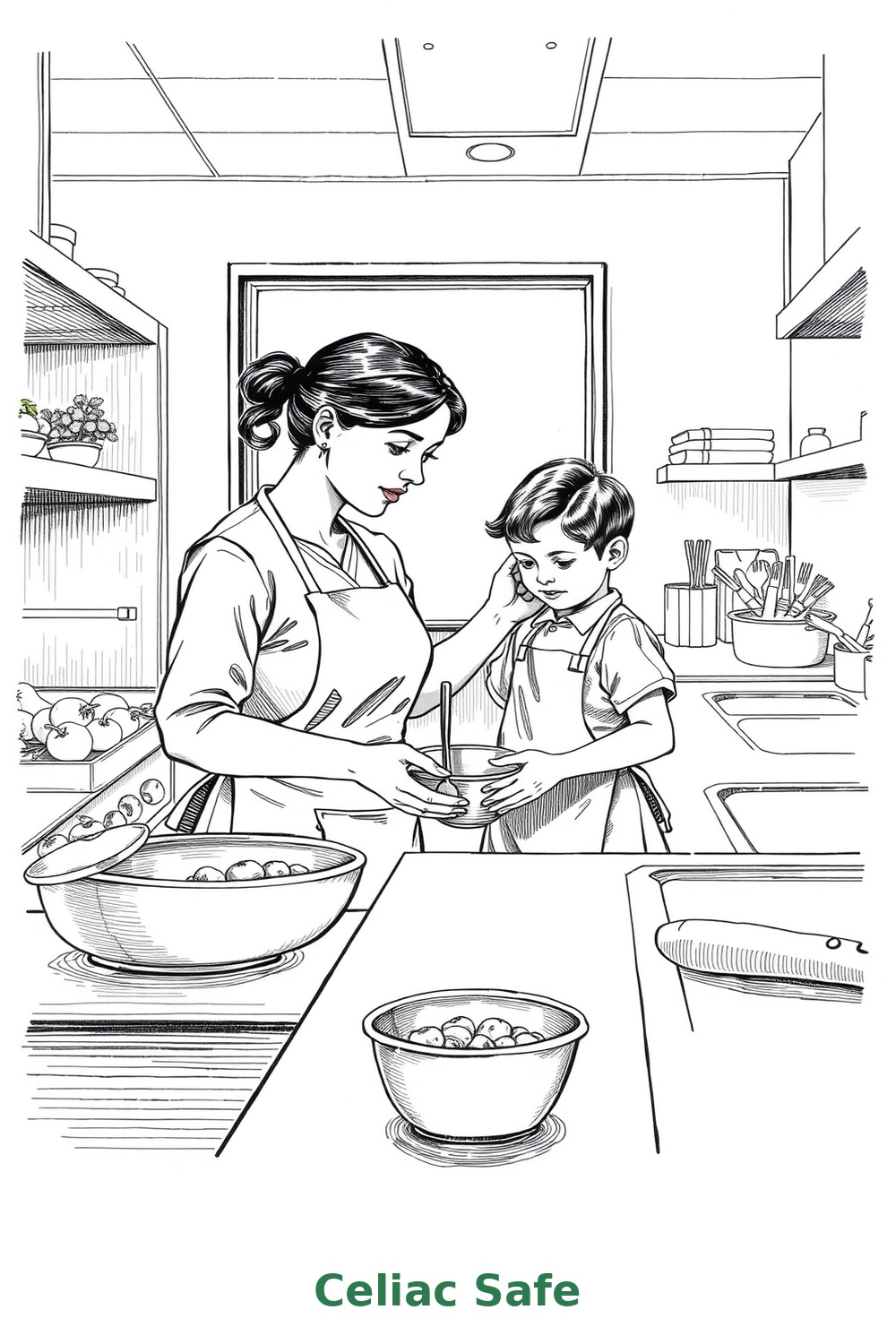
A Massachusetts hospital is doing something that should have been standard practice years ago: teaching kids and families how to actually cook during their medical appointments. For those of us managing celiac disease at home, this isn’t just a feel-good story—it’s a model that could fundamentally change how newly diagnosed families learn to navigate the gluten-free kitchen.
When a Diagnosis Comes With a Skill Set
Here’s what typically happens when your child is diagnosed with celiac disease: You get a stack of handouts, maybe a referral to a dietitian if you’re lucky, and then you’re sent home to figure it out. I remember those early days after my son’s diagnosis, standing in my kitchen wondering if I was doing any of this right. Reading about gluten-free cooking and actually doing it safely are two completely different things.
The teaching kitchen model being used in Massachusetts addresses this gap directly. Instead of separating the medical appointment from the practical reality of daily food preparation, families learn hands-on cooking skills as part of their healthcare visit. Children aren’t just told what they can’t eat—they’re shown what they can make, and they make it themselves.
This matters because celiac disease isn’t like other conditions where you take a medication and move on with your life. Management happens in the kitchen, three times a day, every single day. The clinical setting has traditionally been disconnected from this reality.
Why Cooking Skills Are Medical Intervention
For celiac patients, knowing how to safely prepare food isn’t a nice-to-have—it’s the treatment. There is no medication for celiac disease. The only intervention is a strict gluten-free diet, and strict means understanding concepts like:
- How to prevent cross-contact when sharing a kitchen with gluten-eating family members
- Which ingredients have hidden gluten and how to identify them
- How to substitute gluten-free flours in recipes (hint: it’s rarely a 1:1 swap)
- Safe food handling techniques that become second nature over time
These skills are difficult to convey through pamphlets or even one-hour dietitian consultations. They need to be practiced, corrected, and practiced again. A teaching kitchen embedded in the medical setting gives families the space to make mistakes under guidance, ask questions in real-time, and build confidence before they’re on their own.
For children especially, participating in cooking their own food creates ownership over their condition. my son is far more likely to stick to his gluten-free diet when he’s proud of the meals he helped create than when he feels like gluten-free eating is something being done to him.
The Pediatric Advantage
There’s something particularly powerful about implementing this model in pediatric care. Children diagnosed with celiac disease will be managing this condition for the rest of their lives. The habits and skills they develop now will shape their relationship with food for decades.
Research consistently shows that dietary adherence is one of the biggest challenges in celiac management, particularly among adolescents. A 2020 study published in the Journal of Pediatric Gastroenterology and Nutrition found that many teens struggle with adherence due to social pressures, but also due to lack of practical skills—they simply don’t know how to prepare safe meals for themselves.
Teaching kitchens address this by making children active participants rather than passive recipients of dietary restrictions. When a ten-year-old can confidently make their own gluten-free pancakes or pasta dish, they’re not just learning a recipe. They’re learning that celiac disease doesn’t mean deprivation—it means adaptation.
What This Model Gets Right
The Massachusetts program succeeds because it treats food preparation as inseparable from medical care. This is how it should work:
Integration over isolation. Rather than requiring families to seek out cooking classes separately, the skill-building happens during appointments they’re already attending. This removes barriers of time, cost, and access that prevent many families from getting hands-on education.
Family involvement. Celiac disease affects the whole household, not just the diagnosed child. When parents and siblings learn alongside the patient, they understand the importance of preventing cross-contact and can support safe eating at home.
Age-appropriate learning. Children learn differently than adults. A pediatric teaching kitchen can tailor instruction to make it engaging for kids while still conveying critical safety information.
Immediate application. Families eat what they make. There’s no gap between learning and doing, which reinforces the skills and builds muscle memory.
What I Wish We’d Had
When my son was first diagnosed, we muddled through. I burned a lot of gluten-free bread (turns out GF flours brown faster). I didn’t understand why some of my “safe” meals were still making him sick until I learned about cross-contact from shared cutting boards and colanders. I made mistakes that a few hours in a supervised kitchen could have prevented.
Most celiac families have similar stories. We figure it out eventually, but “eventually” means weeks or months of accidental gluten exposures, frustration, and feeling overwhelmed. For children, those exposures mean ongoing intestinal damage and symptoms that affect their school performance, energy levels, and quality of life.
A teaching kitchen model shortens that learning curve dramatically. It’s not a luxury—it’s a medical intervention that directly impacts patient outcomes.
Expanding Access: The Challenge Ahead
The obvious question is: how do we bring this to more hospitals? Teaching kitchens require space, equipment, staff training, and ongoing funding. Not every medical center has the resources to implement this model.
But the concept can be adapted. Some possibilities for healthcare systems exploring this approach:
- Partnership with culinary schools that could provide space and instruction
- Community cooking classes offered through hospital outreach programs
- Virtual cooking sessions for families in rural areas without access to specialized centers
- Insurance coverage for medical nutrition therapy that includes hands-on preparation training
Advocacy matters here. If families ask for these services, if we communicate to healthcare providers that handouts aren’t enough, we can push the standard of care forward.
Practical Steps for Families Now
If your hospital doesn’t offer a teaching kitchen program, you can still build these skills:
Seek out celiac-specific cooking classes. Many celiac disease foundations and local support groups offer hands-on workshops. These are often free or low-cost and taught by people who understand cross-contact concerns.
Involve your child in the kitchen early. Even young children can help with age-appropriate tasks. The goal is normalizing gluten-free cooking as just… cooking.
Ask your dietitian for demonstrations. Some dietitians offer cooking instruction as part of their practice. If yours doesn’t, it’s worth asking—or asking for a referral to one who does.
Connect with other celiac families. Cooking together and sharing tips builds community and provides practical education that supplements clinical care.
A Model Worth Watching
What’s happening in Massachusetts represents a shift in thinking about chronic disease management. For conditions like celiac disease where daily behavior is the treatment, medical care that stops at diagnosis and dietary counseling falls short. Teaching practical skills in a clinical setting bridges the gap between knowing what to do and being able to do it.
This won’t fix everything. Families will still face challenges with school meals, restaurants, and social situations. But a child who can confidently cook for themselves has a foundation that makes everything else more manageable.
I’ll be watching to see if other pediatric centers adopt this model. For celiac families, it’s exactly the kind of integrated care we need—and the kind we should be demanding.