Oats are naturally gluten-free, but most oatmeal is contaminated with wheat during farming and processing. Learn which certified brands are safe for celiac disease and how to choose oats that won't trigger a reaction.
The short answer: Oats are naturally gluten-free, but most oatmeal is NOT safe for celiac disease. The problem is cross-contact — conventional oats are grown in rotation with wheat, processed on shared equipment, and frequently contaminated with gluten above safe levels. Only oats grown and processed under strict “purity protocol” standards are safe for people with celiac disease.
Why Oatmeal Is Complicated for Celiac Disease
Oats don’t contain gluten proteins (gliadin) like wheat, barley, and rye do. In theory, they should be safe. In practice, studies consistently show that conventional oats contain significant gluten contamination:
- One study found 88% of commercial oat products contained gluten above 20 ppm
- Average contamination levels ranged from 200-2,000 ppm — far above safe thresholds
- Even “health food” brands showed contamination
This contamination happens because:
- Crop rotation — Oats are often planted in fields that grew wheat the previous year
- Shared equipment — Harvesters, trucks, and silos handle both oats and wheat
- Processing facilities — Mills process multiple grains on the same equipment
- Transportation — Bulk oats travel in containers previously used for wheat
For people with celiac disease, this means conventional Quaker Oats, store-brand oatmeal, and even many organic oats are unsafe.
Purity Protocol vs. Mechanical Sorting
Not all “gluten-free” oats are created equal. Understanding the difference between purity protocol and mechanically sorted oats is critical.
Purity Protocol Oats (Recommended)
Purity protocol oats are grown, harvested, transported, and processed in completely separate systems that never contact wheat, barley, or rye. This includes:
- Dedicated fields that have never grown gluten grains
- Dedicated equipment for harvesting and transport
- Dedicated facilities for processing and packaging
- Testing at multiple points in the supply chain
This is the gold standard for celiac safety. Research confirms that purity protocol oats are consistently safe for people with celiac disease.
Mechanically Sorted Oats (Use Caution)
Some brands use optical sorting machines to remove wheat, barley, and rye grains from conventional oats. While this reduces contamination, it doesn’t eliminate it:
- Sorting can’t remove gluten from oat surfaces that contacted wheat dust
- Testing may miss batch-to-batch variation
- Some celiac patients still react to mechanically sorted oats
Notable examples: Cheerios uses mechanical sorting and has faced controversy and lawsuits over gluten levels exceeding labeled claims.
Avenin Sensitivity: A Separate Issue
Approximately 8-10% of people with celiac disease react to avenin, a protein found in oats themselves — even pure, uncontaminated oats. This is NOT a gluten reaction but a separate immune response.
If you’re newly diagnosed or reintroducing oats after healing:
- Wait until intestinal healing is confirmed (usually 6-12 months GF)
- Start with small amounts (1/4 cup dry oats)
- Choose purity protocol oats to eliminate contamination as a variable
- Monitor symptoms for several weeks
- Get follow-up testing if uncertain
If pure oats cause symptoms, you may have avenin sensitivity and should avoid all oats.
Certified Gluten-Free Oat Brands for Celiac Disease
Bob’s Red Mill Gluten-Free Oats (Recommended)
Purity protocol, GFCO certified
Bob’s Red Mill sources oats from dedicated gluten-free farms and processes them in their dedicated gluten-free facility in Oregon. Each batch is tested to verify <10 ppm.
- Certification: GFCO (<10 ppm)
- Protocol: Full purity protocol
- Varieties: Rolled, quick, steel-cut, oat flour
- Availability: Most grocery stores, Amazon
Buy Bob’s Red Mill GF Oats on Amazon
GF Harvest Oats
Purity protocol, founded by celiac advocates
GF Harvest was founded specifically to provide safe oats for the celiac community. Their oats are grown on dedicated farms in Wyoming and processed in a gluten-free facility.
- Certification: GFCO (<10 ppm)
- Protocol: Full purity protocol
- Varieties: Rolled, quick, steel-cut
- Availability: Online, specialty stores
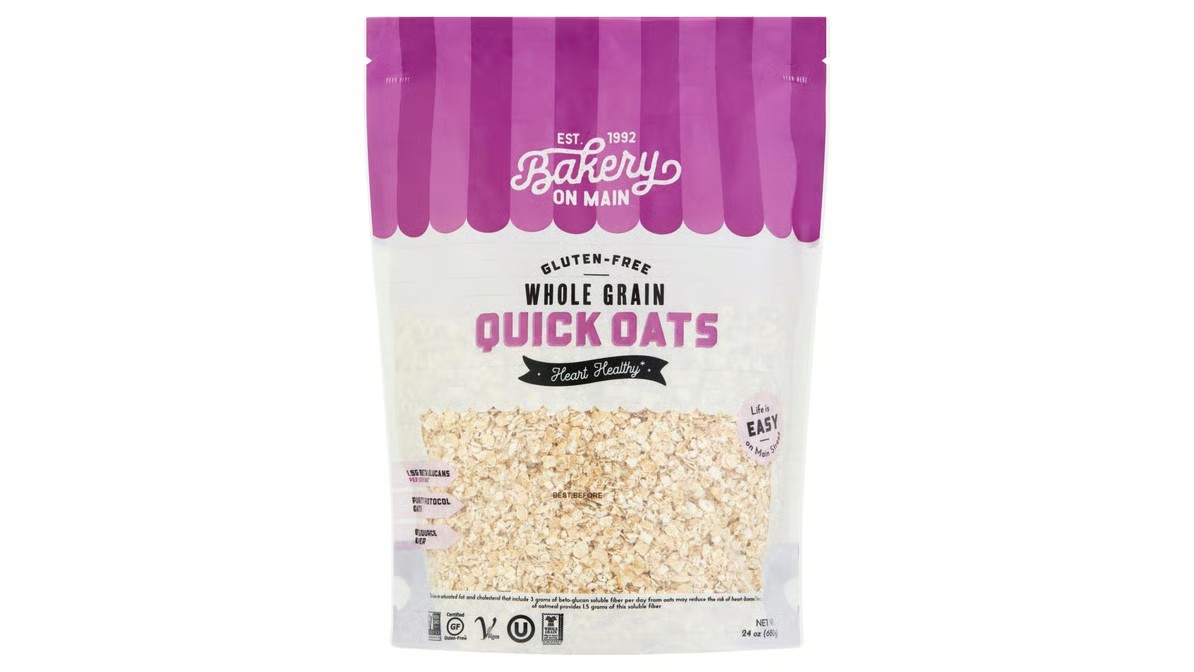
Bakery On Main Oats
Purity protocol, certified gluten-free
Bakery On Main produces oats specifically for celiac-safe baking and breakfast. Their facility is entirely gluten-free.
- Certification: GFCO (<10 ppm)
- Protocol: Purity protocol
- Varieties: Rolled oats, instant oatmeal cups
- Availability: Health food stores, Amazon
Buy Bakery On Main GF Oatmeal on Amazon
Caution: Brands That Use Mechanical Sorting
These brands may test “gluten-free” but don’t use purity protocol:
- Cheerios — Uses optical sorting; documented issues with contamination
- Nature’s Path Organic — Some products use mechanical sorting
- Store brand “gluten-free” oats — Often mechanically sorted
If a brand doesn’t specifically state “purity protocol” or “grown in dedicated fields,” assume it’s mechanically sorted.
Reading Labels: What to Look For
Safe Indicators
- “Purity protocol” or “grown in dedicated gluten-free fields”
- GFCO certification seal (<10 ppm)
- “Processed in a dedicated gluten-free facility”
- Bob’s Red Mill, GF Harvest, or Bakery On Main brand name
Red Flags
- No gluten-free certification (even if labeled “naturally gluten-free”)
- “May contain wheat” advisory
- “Processed in a facility that also processes wheat”
- Generic store brands without purity protocol claims
- Cheerios or other mechanically sorted products if you’re highly sensitive
Oatmeal at Restaurants and Hotels
Oatmeal served at restaurants and hotels is almost never celiac-safe:
- Bulk oats are conventional (contaminated)
- Cross-contact from shared preparation areas
- Toppings may contain gluten (granola, wheat-based additives)
Safer Alternatives
- Bring your own instant oatmeal cups — Bakery On Main makes portable GF cups
- Order eggs, fruit, or hash browns instead of oatmeal
- Ask specifically if oatmeal is certified GF and purity protocol (unlikely)
Quick Reference Summary
| Status | Details |
|---|---|
| Naturally GF? | Yes, but contamination makes most oatmeal unsafe |
| Common Hidden Gluten | Cross-contact from farming, processing, transport |
| Safe Brands | Bob’s Red Mill GF, GF Harvest, Bakery On Main (purity protocol) |
| Label Keywords | ”Purity protocol,” “dedicated GF fields,” GFCO seal |
| Restaurant Tip | Avoid oatmeal at restaurants; bring your own or skip |
The Bottom Line
Oats are one of the most misunderstood foods for celiac disease. While naturally gluten-free, the vast majority of oatmeal products are contaminated and unsafe. Only purchase oats with:
- GFCO certification (<10 ppm)
- Purity protocol sourcing (not mechanical sorting)
- Dedicated gluten-free facility processing
Bob’s Red Mill Gluten-Free Oats are widely available and meet all three criteria.
If you’ve avoided oats since your celiac diagnosis, purity protocol oats may be worth trying — but introduce them slowly and monitor your response. Some celiac patients have avenin sensitivity and need to avoid all oats regardless of contamination status.
Related Guides
Sources
- Celiac Disease Foundation: Oats and the Gluten-Free Diet
- Beyond Celiac: Are Oats Gluten-Free?
- PubMed: Gluten contamination of commercial oat products
- PubMed: Safety of pure oats in celiac disease
- FDA Gluten-Free Labeling Final Rule
- GFCO Certification Standards
- Gluten Free Watchdog: Cheerios Controversy