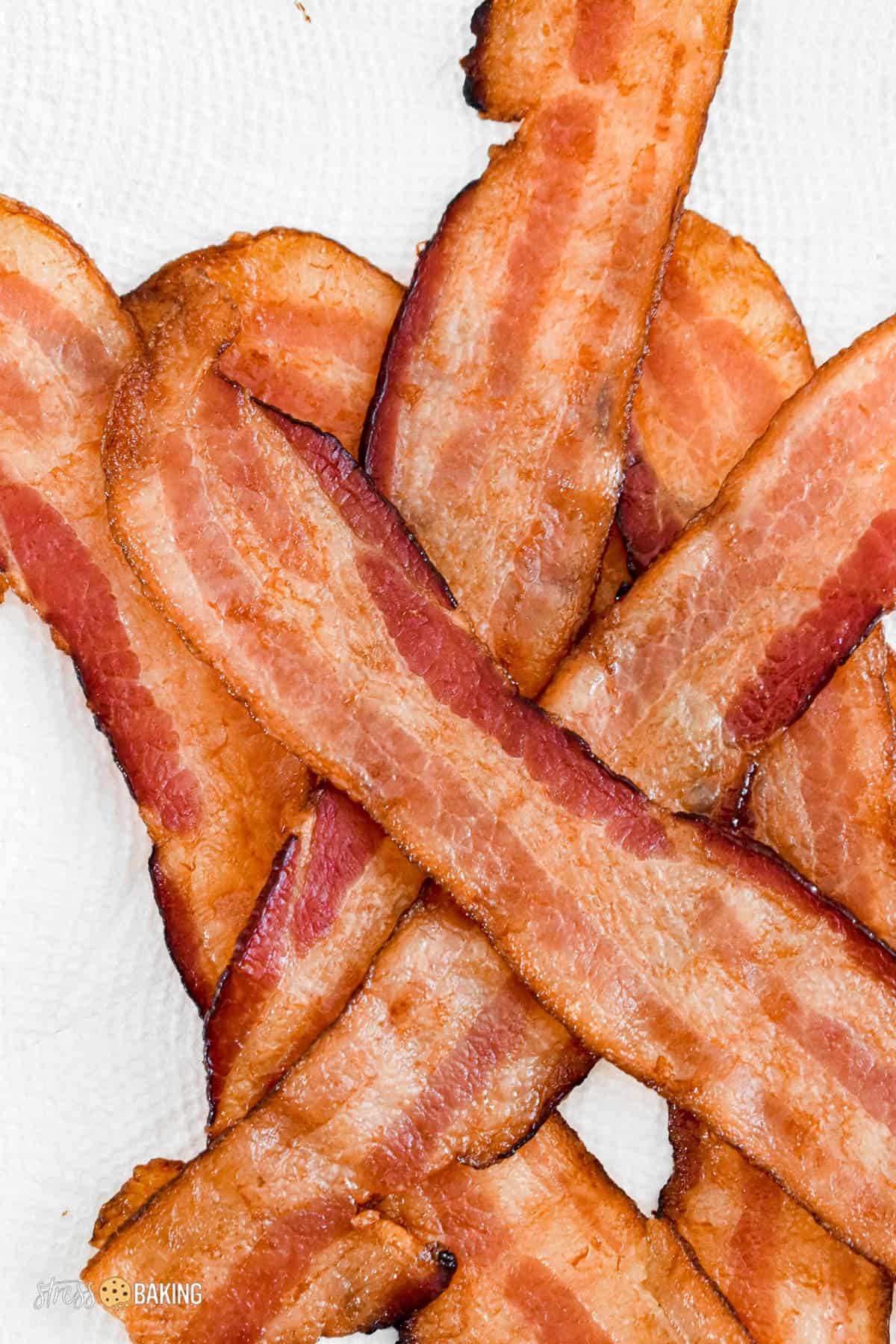
Does bacon contain gluten? Plain bacon is naturally gluten-free, but flavored types, curing agents, and cross-contact can hide gluten. See which bacon brands are celiac-safe and what to check on the label.
The short answer: Most plain bacon is naturally gluten-free and safe for celiac disease. Bacon is made from pork belly cured with salt, sugar, and spices — ingredients that are typically gluten-free. However, some flavored bacons, certain curing agents, and restaurant preparations may contain hidden gluten. Reading labels carefully is essential.
Why Plain Bacon Is Usually Safe
Traditional bacon curing uses gluten-free ingredients:
- Pork belly — Naturally gluten-free meat
- Salt — Naturally gluten-free
- Sugar — Naturally gluten-free
- Sodium nitrite — Preservative, gluten-free
- Smoke flavoring — Usually gluten-free
- Black pepper — Naturally gluten-free
The basic bacon-making process involves no wheat, barley, or rye. Most plain bacon from major brands is safe for celiac patients.
Where Gluten Can Hide in Bacon
Flavored Bacon Varieties
Flavored bacons may contain gluten-containing ingredients:
| Flavor | Potential Gluten Source |
|---|---|
| Maple bacon | Usually safe, but check additives |
| Brown sugar bacon | Usually safe |
| Peppered bacon | Usually safe, verify seasoning |
| Teriyaki bacon | Often contains soy sauce (wheat) |
| Beer bacon | Contains barley |
| BBQ bacon | May contain malt or soy sauce |
| Jalapeño bacon | Usually safe, check seasonings |
Curing Agents to Watch
Some curing processes may use:
- Malt extract — Contains barley gluten
- Hydrolyzed wheat protein — Contains gluten
- Soy sauce — Traditional soy sauce contains wheat
- Modified food starch — May be wheat-based
Cross-Contact Concerns
At processing facilities:
- Shared equipment with breaded products
- Production lines handling wheat-containing items
At restaurants:
- Bacon cooked on same griddle as pancakes/toast
- Shared tongs and utensils
- Bacon bits from seasoning mixes
At home:
- Shared cooking surfaces
- Bacon grease had cross-contact from previous cooking
Major Bacon Brands: Gluten Status
Oscar Mayer Bacon
Most varieties labeled gluten-free
Oscar Mayer is widely available and celiac-friendly:
- Original — Gluten-free
- Center Cut — Gluten-free
- Thick Cut — Gluten-free
- Turkey Bacon — Check label, usually GF
- Naturally Hardwood Smoked — Gluten-free
Hormel Black Label Bacon
Labeled gluten-free
Hormel clearly labels their bacon products:
- Original — Gluten-free
- Thick Cut — Gluten-free
- Lower Sodium — Gluten-free
- Center Cut — Gluten-free
Applegate Farms Bacon
Certified options available
Applegate is known for cleaner ingredients:
- Certification: Some products certified GF
- No antibiotics — Cleaner product overall
- Uncured varieties — No nitrates added
- Availability: Natural grocery stores, many supermarkets
Wright Brand Bacon
Labeled gluten-free
Premium thick-cut bacon:
- Status: Labeled gluten-free
- Quality: Thick, restaurant-style cuts
- Varieties: Hickory Smoked, Applewood Smoked
- Availability: Most grocery stores
Pederson’s Natural Farms
Certified gluten-free
For those wanting maximum assurance:
- Certification: Certified gluten-free
- No sugar varieties available
- Whole30 approved options
- No nitrates/nitrites options
Buy Pederson’s Bacon on Amazon
Store Brands
Usually safe, always verify
Most store brand plain bacon is GF:
- Kirkland (Costco) — Check label, usually GF
- Great Value (Walmart) — Check label, usually GF
- 365 (Whole Foods) — Usually GF
Reading Bacon Labels
What to Look For
Safe indicators:
- “Gluten-free” label
- Simple ingredient list — Pork, salt, sugar, sodium nitrite, smoke
- No allergen warnings for wheat
Red flags:
- Teriyaki, BBQ, or beer flavors — Often contain gluten
- “Contains wheat” in allergen statement
- Hydrolyzed wheat protein in ingredients
- Malt extract or malt flavoring — Contains barley
Example Safe Ingredient List
Ingredients: Pork, water, salt, sugar, sodium
phosphate, sodium erythorbate, sodium nitrite.
This simple list indicates a safe product.
Turkey Bacon and Alternatives
Turkey Bacon
Usually gluten-free, but verify
Turkey bacon can be a leaner alternative:
- Most brands are GF — Butterball, Oscar Mayer, Jennie-O
- Check for additives — Some have more processing
- Lower fat — If that’s a priority
- Different texture — Not identical to pork bacon
Canadian Bacon
Typically gluten-free
Also called back bacon:
- Usually safe — Simple curing process
- Check labels — Some honey-glazed may have additives
- Jones Dairy Farm — Certified GF options available
Bacon Alternatives
For those avoiding pork:
- Beef bacon — Usually GF, check labels
- Duck bacon — Usually GF, specialty item
- Coconut bacon — Verify GF status, often safe
Bacon Bits and Crumbles
Real Bacon Bits
Usually safe:
- Hormel Real Bacon Bits — Gluten-free
- Oscar Mayer Real Bacon Bits — Gluten-free
Imitation Bacon Bits
Often contain gluten:
- Made from soy protein — May contain wheat
- Check carefully — McCormick Bac’n Pieces contain soy, verify status
- Cheaper brands — Higher risk of gluten ingredients
Recommendation: Stick with real bacon bits, which are typically safer.
Bacon at Restaurants
Cross-Contact Risks
Restaurants present specific challenges:
- Shared griddles — Pancakes, French toast cooked on same surface
- Same cooking oil — May be used for breaded items
- Preparation area — Near flour-heavy stations
- Pre-cooked bacon — May be stored near bread products
Questions to Ask
- “Is your bacon cooked on a separate surface from pancakes/bread?”
- “Do you use a clean pan for my bacon?”
- “Are there any wheat ingredients in your bacon seasoning?”
- “Can you use fresh utensils for my order?”
Safer Restaurant Options
- Request bacon cooked in dedicated pan — Less cross-contact risk
- Order bacon as side — Easier to control preparation
- Ask about brand — Some restaurants use quality brands
- Avoid bacon in dishes — BLTs, bacon-wrapped items have more variables
Cooking Bacon Safely at Home
For Dedicated GF Kitchens
No special precautions needed — cook bacon normally.
For Shared Kitchens
- Use clean pan — Not one used for breaded items without washing
- Avoid shared grease — Don’t reuse bacon grease that cooked breaded foods
- Dedicated tongs — Prevent cross-contact from other cooking
- Fresh oil — If deep-frying, use fresh oil
Bacon Grease Storage
Bacon grease is naturally gluten-free. To keep it safe:
- Store in clean container — Away from gluten sources
- Label clearly — So others know it’s GF
- Don’t add grease from cooking breaded items
Frequently Asked Questions
Does bacon have gluten?
Plain bacon has no gluten — it’s just pork, salt, sugar, and cure. Gluten only shows up in flavored bacon (teriyaki, beer, some BBQ), in malt- or soy-based curing agents, or through cross-contact on a shared restaurant griddle.
Does bacon contain gluten?
Standard, unflavored bacon from major brands contains no gluten ingredients. Always scan the label for malt flavoring, soy sauce, or hydrolyzed wheat protein — those are the ingredients that turn “bacon” into a gluten risk.
Is turkey bacon gluten-free?
Most turkey bacon (Butterball, Oscar Mayer, Jennie-O) is gluten-free, but it’s more processed than pork bacon, so verify the label for added flavorings or starches.
What bacon brands are certified gluten-free?
Pederson’s Natural Farms is certified gluten-free, and several Applegate varieties carry certification. Oscar Mayer, Hormel Black Label, and Wright Brand are labeled gluten-free on most plain varieties.
Is restaurant bacon safe for celiacs?
Not reliably. Restaurant bacon is often cooked on the same griddle as pancakes and French toast and handled with shared utensils. Ask for it cooked in a clean, dedicated pan.
Quick Reference Summary
| Status | Details |
|---|---|
| Naturally GF? | Yes — plain pork bacon contains no gluten |
| Safe Brands | Oscar Mayer, Hormel, Applegate, Wright Brand |
| Certified GF | Pederson’s, some Applegate varieties |
| Hidden Gluten Risk | Teriyaki, BBQ, beer flavors; some curing agents |
| Cross-Contact | Restaurant griddles, shared equipment |
| Safest Choice | Plain bacon from major brands with simple ingredients |
The Bottom Line
Plain bacon from major brands is naturally gluten-free and safe for most celiac patients. The traditional curing process uses salt, sugar, and smoke — all gluten-free ingredients.
For safe bacon eating:
- Choose plain varieties — Oscar Mayer, Hormel Black Label, Wright Brand
- Avoid flavored bacons — Teriyaki, BBQ, and beer varieties often contain gluten
- Read labels — Watch for malt extract, soy sauce, or wheat protein
- Consider certified — Pederson’s or Applegate for extra assurance
- Watch restaurants — Ask about separate cooking surfaces
Bacon is one of the easier breakfast meats to navigate for celiac disease. Stick with plain, unflavored varieties from trusted brands, and be mindful of cross-contact in restaurant settings.