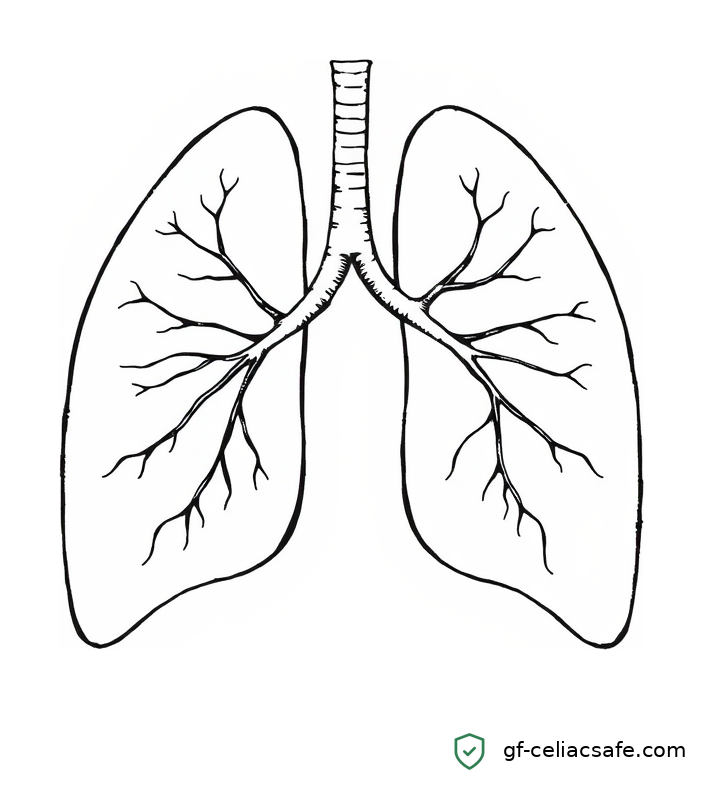
Celiac disease is already a condition that demands constant vigilance—reading every label, questioning every restaurant meal, worrying about cross-contact at birthday parties. The last thing any celiac parent wants to hear is that there might be more to worry about. But a new study published in Medicine (Baltimore) has found genetic evidence that celiac disease may increase the risk of developing pulmonary arterial hypertension (PAH), a rare but serious condition affecting the blood vessels in the lungs.
Before anyone panics—and I say this as much to myself as to anyone reading—let me be clear: this is not a reason to lose sleep tonight. But it is a reason to understand what the research actually shows, why it matters, and what it means for how celiac patients and families approach long-term health monitoring.
What the Researchers Found
The study, conducted by researchers at multiple Chinese institutions, used a technique called Mendelian randomization to investigate whether celiac disease has a causal relationship with pulmonary arterial hypertension. This method uses genetic variants as proxies to test cause-and-effect relationships between conditions—it’s a way of asking whether having genes associated with celiac disease actually leads to higher PAH risk, rather than just observing that both conditions sometimes occur together.
The researchers analyzed data from the FinnGen consortium and other large genetic databases. Their findings were significant: celiac disease appears to causally increase the risk of developing PAH. They also looked at potential mediating factors, including autoimmune disorders, to understand the pathway through which celiac disease might lead to PAH.
To strengthen their conclusions, the team performed multivariable analysis that controlled for confounding factors like obesity and smoking. Even after these adjustments, the association held.
What Is Pulmonary Arterial Hypertension?
PAH is a type of high blood pressure that affects the arteries in the lungs and the right side of the heart. Unlike regular hypertension, which most people associate with general blood pressure readings, PAH specifically involves the pulmonary arteries becoming narrowed or stiff. This forces the heart to work harder to pump blood through the lungs.
Symptoms can include shortness of breath during routine activities, fatigue, chest pain, racing heartbeat, and swelling in the ankles or legs. Because these symptoms overlap with many other conditions—including some celiac-related complications—PAH can be difficult to diagnose early.
PAH is rare in the general population. But for celiac families already navigating a complex health landscape, understanding potential connections to other conditions matters.
Why This Matters for Celiac Families
This study adds to a growing body of research connecting celiac disease to conditions beyond the digestive tract. The celiac community has long known that untreated or poorly managed celiac disease can affect multiple organ systems. What makes this research notable is the use of genetic analysis to suggest a causal link, not just an association.
Earlier this year, we covered how celiac patients report significant fatigue, poor overall health, and gaps in their medical care. That reporting highlighted something celiac families experience daily: the medical system often treats celiac disease as a dietary inconvenience rather than the systemic autoimmune condition it actually is. Studies like this one remind us that celiac disease can have far-reaching effects—and that comprehensive health monitoring should be part of ongoing care.
For parents raising children with celiac disease, this research underscores the importance of maintaining regular follow-up appointments and being attentive to symptoms that might seem unrelated to digestion. Shortness of breath, unusual fatigue, or decreased exercise tolerance in a child with celiac disease should warrant a conversation with a healthcare provider.
The Autoimmune Connection
The researchers investigated whether autoimmune disorders might mediate the relationship between celiac disease and PAH. This makes biological sense. Celiac disease is itself an autoimmune condition, and people with one autoimmune disease are statistically more likely to develop others. Chronic inflammation and immune dysregulation—hallmarks of celiac disease, especially when poorly controlled—can affect blood vessels and other tissues throughout the body.
The inflammation-driven pathway offers one potential explanation for how a disease primarily affecting the small intestine could influence lung vasculature. It also reinforces why strict adherence to a gluten-free diet matters for reasons beyond immediate digestive symptoms. Reducing ongoing immune activation may help protect against some of these downstream effects.
Keeping Perspective
A few important caveats before this research sends anyone spiraling. First, PAH remains a rare condition. Even if celiac disease increases the relative risk, the absolute risk for any individual patient remains low. Second, this study used genetic data to model causality—it did not follow actual celiac patients over time to track who developed PAH. Mendelian randomization is a powerful tool, but it has limitations.
Third, and perhaps most importantly, the best thing celiac patients can do is what they should already be doing: maintaining strict adherence to a gluten-free diet to minimize ongoing immune activity, keeping regular appointments with healthcare providers, and speaking up about any new or unexplained symptoms.
For my son, this study doesn’t change our daily routine. He still needs to avoid gluten. We still need to read every label. He still needs regular check-ups with his gastroenterologist. What this research does is add one more piece to the puzzle of understanding celiac disease as a whole-body condition—and one more reason why celiac patients deserve comprehensive, coordinated medical care rather than a dismissive “just don’t eat gluten.”
What to Discuss With Your Doctor
If you or your child has celiac disease, this study might prompt a few questions at your next appointment:
- Are there any symptoms I should watch for that might suggest cardiovascular or pulmonary involvement?
- How often should we be doing comprehensive health screenings beyond celiac-specific markers?
- Given the autoimmune nature of celiac disease, what other conditions should we be monitoring for?
Healthcare providers who specialize in celiac disease are generally aware that the condition can have extraintestinal manifestations. But not every celiac patient has access to specialized care, and many are managed primarily by general practitioners. Bringing research like this to appointments can help facilitate more thorough conversations about long-term health monitoring.
The Bigger Picture
Every few months, another study emerges linking celiac disease to some condition that seems unrelated to the gut. It can feel overwhelming—as if the list of things to worry about keeps growing. But I try to view these findings differently. Each piece of research helps build a more complete picture of what celiac disease actually is and how it affects the body. That understanding is what will eventually lead to better treatments, earlier interventions, and more comprehensive care.
For now, celiac families can take some comfort in knowing that researchers are paying attention to these connections. The more we understand about the systemic effects of celiac disease, the better equipped the medical community will be to support patients and families navigating this condition.
My son didn’t ask for celiac disease. None of our kids did. But staying informed about research like this—without letting it consume us—is part of advocating for the care they deserve.
Related Coverage
References
Wu M, Song W, Guo X, Lu Z, Yang J, Hu Z. Celiac disease increases the risk of pulmonary arterial hypertension: A multivariable Mendelian randomization and mediation analysis. Medicine (Baltimore). 2026;105(15):e48334. doi:10.1097/MD.0000000000048334. Available at: https://pubmed.ncbi.nlm.nih.gov/41961647/